


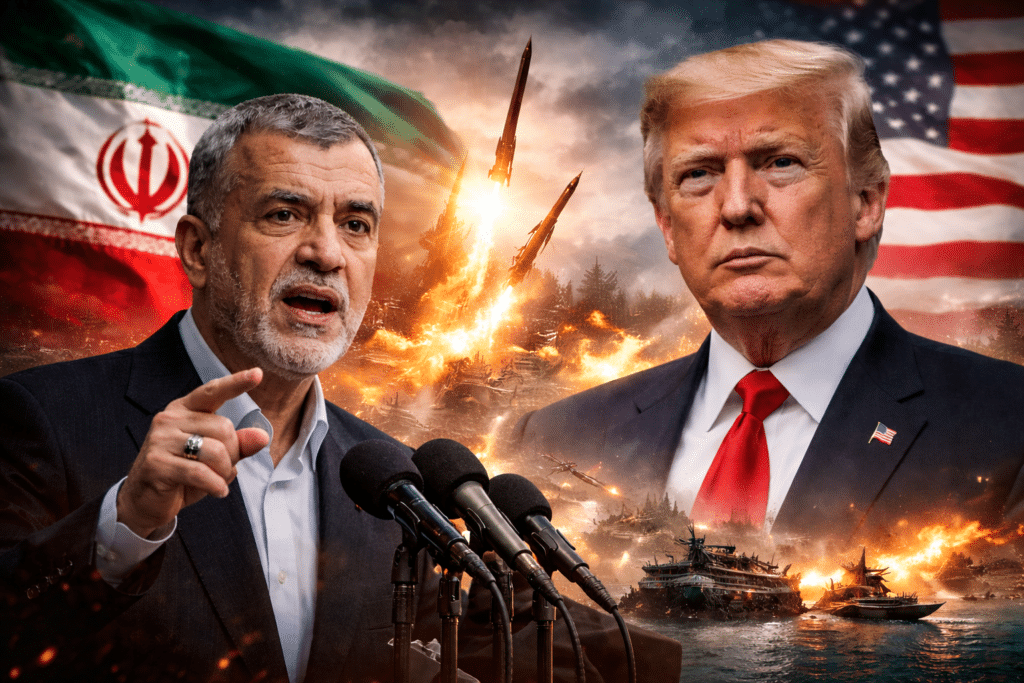
Global Alarm Grows as Iran Says It Is in a “Full Scale War” With the United States
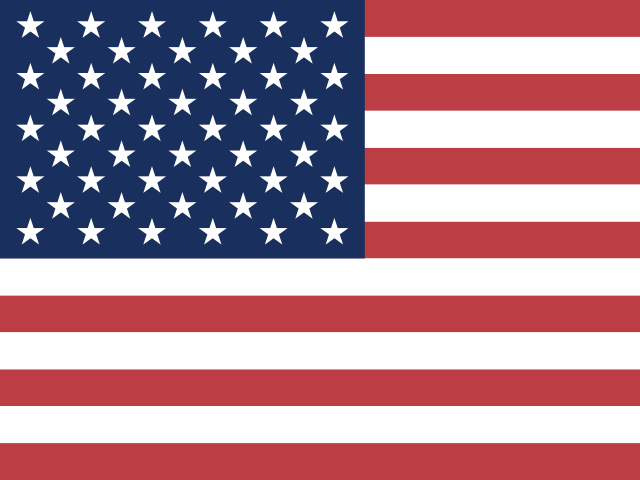
International concern is growing after Iran’s president made powerful statements claiming the country is facing a “full scale war” involving the United States, Israel, and Europe. The comments quickly sparked debate, confusion, and fear, especially among Americans wondering if this means an official declaration of war.
While Iran has not formally declared war, the message signals rising tension at a moment when global stability already feels fragile. Understanding what these words mean and what they do not mean is critical.
What Was Actually Said?
Iran’s president used strong language to describe the country’s current situation, framing economic pressure, military threats, and regional conflicts as part of a larger battle. From Iran’s point of view, sanctions, foreign military presence, and political influence are all connected.
However, in international law, a declaration of war is a formal act, and that has not happened. Instead, this statement appears to be a political warning meant to show strength and resistance, both to foreign rivals and to citizens at home.
Why Are Tensions Rising Now?
The timing of these remarks is important. High-level talks are taking place between the United States and Israel, with major discussions around security, regional conflicts, and future military strategy. Iran views these meetings as a direct threat to its influence in the Middle East.
At the same time, ceasefire efforts in the region remain fragile. Any breakdown could increase violence and pull more countries into indirect or direct conflict.
Is This a Real Risk of War?
A direct military war between Iran and the United States is not likely in the immediate future, but the risk of escalation cannot be ignored. Modern conflicts do not always begin with tanks and missiles. They often grow through cyber attacks, proxy forces, sanctions, and political pressure.
This kind of tension can still have serious global effects, including:
- Higher fuel and energy prices
- Market instability
- Increased military presence worldwide
- Growing fear and uncertainty among civilians
Why Americans Are Paying Close Attention
Americans are especially alert because conflicts involving the U.S. often lead to long-term consequences, both overseas and at home. Rising global tensions can affect the economy, national security, and even daily costs like gas and food.
Strong statements like these raise concerns not just about war, but about how quickly situations can spiral out of control if diplomacy fails.
The Role of Diplomacy Moving Forward
Despite the harsh language, most global leaders understand that open conflict would be devastating. Behind the scenes, diplomacy continues, with negotiations, private discussions, and strategic messaging all playing key roles.
The next few weeks will be crucial. Words spoken by leaders can either calm tensions or inflame them further. Careful decision making will be essential to avoid misunderstandings that could lead to irreversible outcomes.
What This Moment Tells Us About the World Today
This situation highlights how connected and sensitive the modern world has become. A single statement can move markets, dominate headlines, and shape global conversations in hours.
While Iran has not declared war, its message is clear: it feels cornered and wants to project strength. Whether this leads to dialogue or deeper conflict depends on the actions taken next not just by Iran, but by all involved nations.
Final Takeaway
Right now, the world stands at a tense crossroads. There is no official war, but there is undeniable pressure. The hope remains that cooler heads will prevail and that diplomacy will guide the path forward instead of confrontation.
Staying informed, understanding the facts, and watching developments closely is more important than ever in uncertain times.