



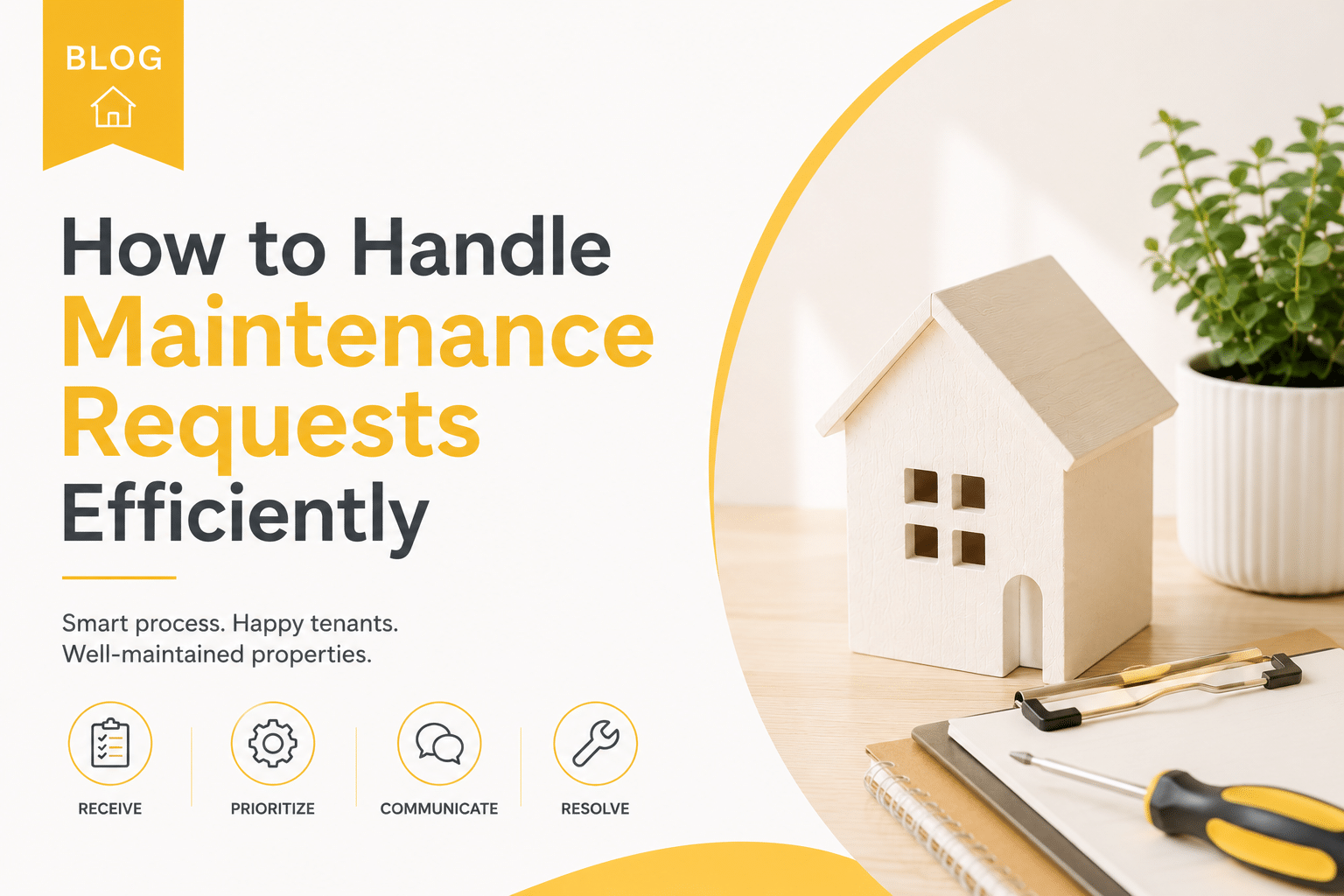
How to Handle Maintenance Requests Efficiently
Maintenance requests are a normal part of property management. Whether it’s a leaking faucet, an appliance issue, or a repair concern, how quickly and effectively these requests are handled can significantly impact tenant satisfaction and property condition.
An efficient maintenance process benefits both residents and property owners by reducing downtime, preventing larger problems, and creating a positive rental experience.
Encourage Prompt Reporting
The first step in handling maintenance efficiently is ensuring tenants know how and when to report issues.
Residents should have clear instructions on who to contact and how to submit maintenance requests. Encouraging early reporting helps prevent minor issues from becoming major repairs.
The sooner a problem is reported, the sooner it can be resolved.
Prioritize Requests Appropriately
Not all maintenance issues require the same level of urgency.
Emergency situations such as plumbing leaks, electrical hazards, or safety concerns should be addressed immediately. Less urgent repairs can be scheduled based on priority and availability.
Having a clear system helps ensure resources are used effectively.
Maintain Clear Communication
Communication is one of the most important parts of the maintenance process.
Keeping tenants informed about repair schedules, technician visits, and progress updates helps manage expectations and builds trust.
People appreciate knowing what is happening and when to expect a resolution.
Work with Reliable Vendors
Strong relationships with trusted contractors and service providers can make a significant difference.
Reliable vendors help complete repairs efficiently, maintain quality standards, and reduce delays.
A dependable maintenance network is a valuable asset for any property management team.
Keep Detailed Records
Tracking maintenance requests helps improve organization and accountability.
Documenting requests, repair dates, costs, and completed work provides valuable information for future planning and budgeting.
Accurate records also help identify recurring issues before they become larger concerns.
Focus on Preventative Maintenance
The best maintenance request is often the one that never happens.
Routine inspections and preventative maintenance can identify potential problems early and reduce the number of emergency repairs.
Investing in prevention often saves both time and money.
Follow Up After Repairs
Once a repair is completed, checking in with the tenant helps ensure the issue has been fully resolved.
Follow-up communication demonstrates professionalism and shows residents that their concerns matter.
A small follow-up can leave a lasting positive impression.
Final Thoughts
Efficient maintenance management is about more than fixing problems—it’s about providing excellent service.
By encouraging prompt reporting, prioritizing requests, communicating clearly, and focusing on preventative care, property managers can create a smoother experience for tenants while protecting the long-term value of the property.
A well-managed maintenance process benefits everyone involved.