



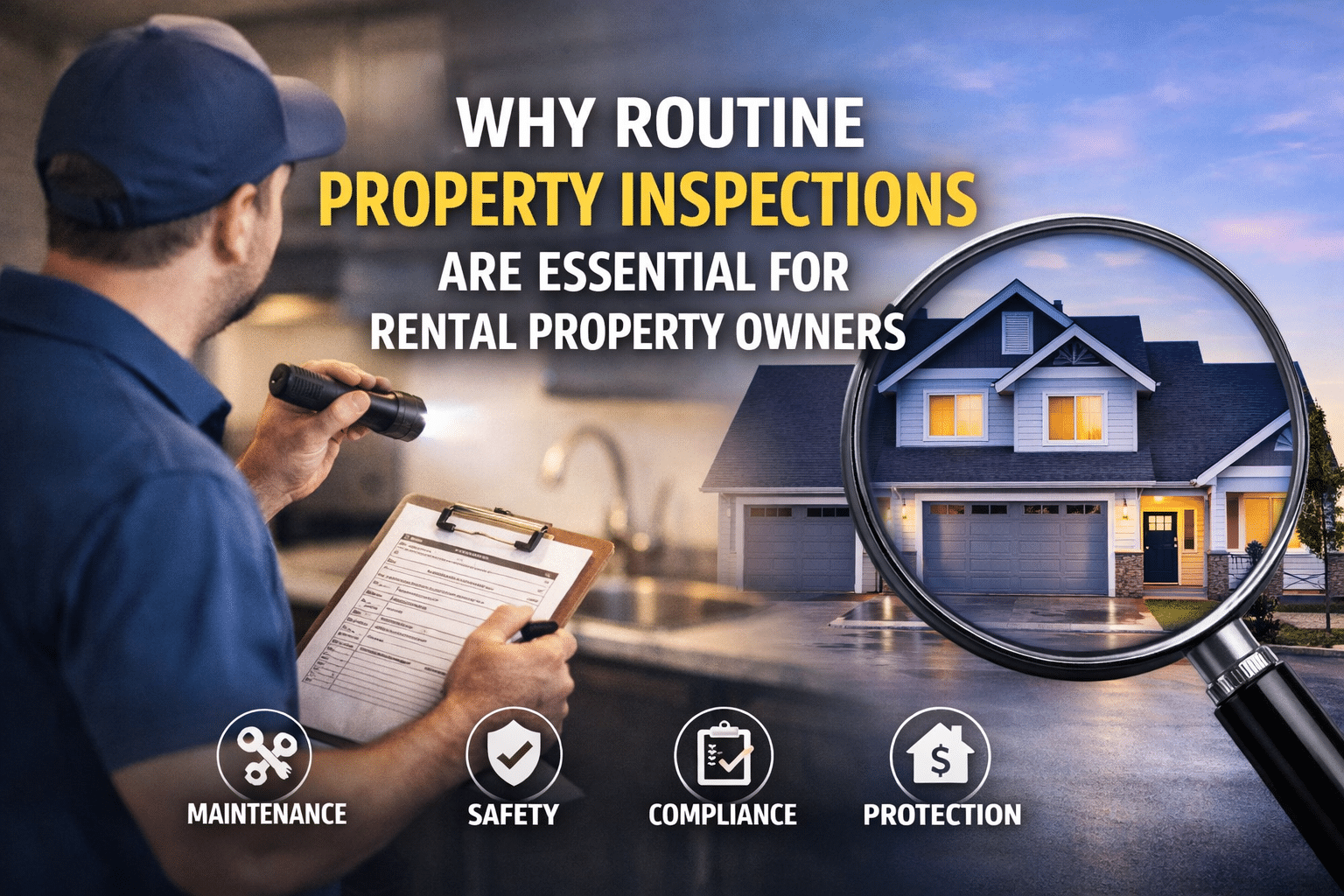
Why Routine Property Inspections Are Essential for Rental Property Owners
Many rental property owners focus on rent collection, tenant placement, and maintenance requests—but one of the most valuable tools in protecting a rental investment is often overlooked: routine property inspections.
Property inspections are not about invading a tenant’s space. They are about protecting the condition of the home, identifying issues early, and ensuring the property remains compliant, safe, and profitable over time.
When done professionally and consistently, inspections can prevent costly surprises and help landlords make smarter decisions.
Why Property Inspections Matter
Rental properties experience wear and tear over time, and not all issues are reported right away.
Routine inspections help property owners:
- Identify maintenance problems early
- Prevent small issues from becoming expensive repairs
- Ensure lease compliance
- Protect the long-term value of the property
- Maintain safety and habitability standards
Inspections provide visibility that landlords often don’t have during a lease term.
Types of Property Inspections Every Landlord Should Consider
A structured inspection process should happen at different stages of the rental cycle.
Move-In Inspections
These establish the condition of the property before a tenant takes occupancy.
Move-in inspections help:
- Document existing conditions
- Protect both landlord and tenant
- Reduce disputes at move-out
Clear documentation is essential.
Routine Mid-Lease Inspections
These are scheduled inspections during the tenancy to ensure the property is being maintained properly.
They can reveal:
- Unreported maintenance issues
- Lease violations
- Safety concerns
- Preventative maintenance needs
Mid-lease inspections are one of the best ways to protect the property proactively.
Move-Out Inspections
These are conducted after a tenant vacates the property.
They help landlords assess:
- Damage beyond normal wear and tear
- Cleaning or repair needs
- Security deposit deductions
This step is critical for preparing the property for the next tenant.
What Property Owners Should Look For
A proper inspection should go beyond appearance.
Key areas to review include:
- Plumbing leaks or moisture damage
- HVAC condition
- Appliance functionality
- Smoke and carbon monoxide detectors
- Walls, flooring, and windows
- Exterior condition and landscaping
The goal is to identify both visible issues and early warning signs.
Inspections Help Reduce Long-Term Costs
Routine inspections often save money over time.
Why?
Because it is far less expensive to fix:
- A minor leak than major water damage
- A small HVAC issue than a full replacement
- A simple lease violation before it escalates
Proactive oversight protects cash flow and reduces risk.
The Role of Professional Property Management
Professional property management companies conduct inspections in a structured, documented, and legally compliant manner.
This includes:
- Proper notice to tenants
- Photo documentation
- Detailed reporting
- Follow-up on maintenance or lease issues
This process protects both the property and the landlord.
Protecting Your Investment Requires Visibility
A rental property is a long-term asset, and like any investment, it performs best when monitored and maintained consistently.
Routine inspections are one of the smartest ways to reduce risk, protect value, and prevent avoidable expenses.
At Allstates Property, we help landlords protect their properties through structured inspections, proactive maintenance oversight, and professional property management systems.
Because the best way to avoid costly surprises is to catch problems early.