




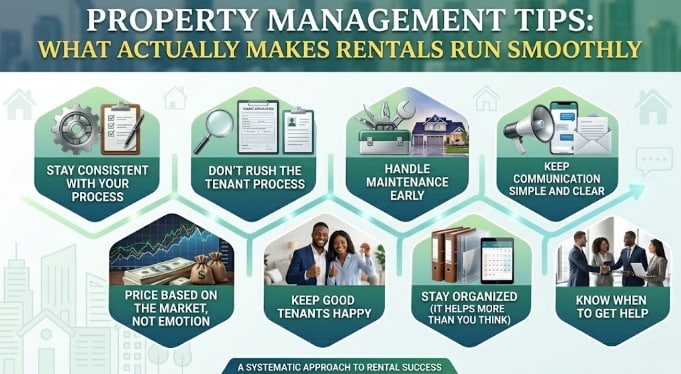
Property Management Tips: What Actually Makes Rentals Run Smoothly
When people think about property management, they usually picture collecting rent and fixing things when they break.
But if you’ve been in it for a while, you know it’s a lot more than that.
It’s about staying organized, setting the right expectations, and handling small things before they turn into bigger problems. The properties that run smoothly aren’t just lucky—it’s usually because there’s a solid system behind them.
Here are a few practical tips that make a real difference over time.
Stay Consistent with Your Process
One thing that helps more than anything is consistency.
Having a set way of doing things how you screen tenants, how you handle maintenance, how you communicate makes everything easier. It saves time, avoids confusion, and keeps things fair across the board.
When you’re making decisions on the fly every time, that’s when mistakes and stress start to build up.
Don’t Rush the Tenant Process
It’s tempting to fill a vacancy as quickly as possible, especially when the property is sitting empty.
But rushing usually leads to bigger issues later.
Taking the time to properly screen tenants and choose someone who fits the property well can save you from late payments, damage, and unnecessary turnover. A few extra days upfront is usually worth it.
Handle Maintenance Early
Small issues don’t stay small for long.
That minor repair you put off today can easily turn into something more expensive tomorrow. Staying ahead of maintenance not only protects your property, it also keeps tenants happier.
And when tenants feel like things are taken care of, they’re more likely to take care of the place themselves.
Keep Communication Simple and Clear
A lot of problems come down to miscommunication.
Tenants should know exactly how to reach you, how to submit requests, and what to expect. When things are clear, you’ll get fewer repeated questions and fewer misunderstandings.
You don’t need to overcomplicate it—just be consistent and easy to reach.
Price Based on the Market, Not Emotion
It’s easy to get attached to a property and price it based on what you feel it’s worth.
But the market doesn’t work that way.
Looking at comparable rentals and current demand will give you a much better idea of where your price should be. A well-priced home rents faster and usually attracts better applicants.
Keep Good Tenants Happy
Not every tenant is perfect, but when you find a good one, it’s worth keeping them.
Turnover costs time and money—cleaning, repairs, marketing, and vacancy all add up. Sometimes, keeping a reliable tenant is more valuable than pushing for a higher rent and starting over.
Stay Organized (It Helps More Than You Think)
Keeping track of leases, payments, maintenance, and communication might not be the most exciting part but it’s one of the most important.
When everything is organized, you spend less time searching for information and more time actually managing the property effectively.
Know When to Get Help
At some point, managing everything on your own can start to feel overwhelming.
Whether it’s multiple properties, constant maintenance calls, or just the day-to-day responsibilities, it adds up.
Having the right support in place can take a lot of pressure off and help everything run more smoothly.
Good property management isn’t about doing one big thing right it’s about doing a lot of small things consistently.
When you stay organized, communicate clearly, and take care of issues early, everything becomes easier to manage.
And over time, those small habits are what make the biggest difference.